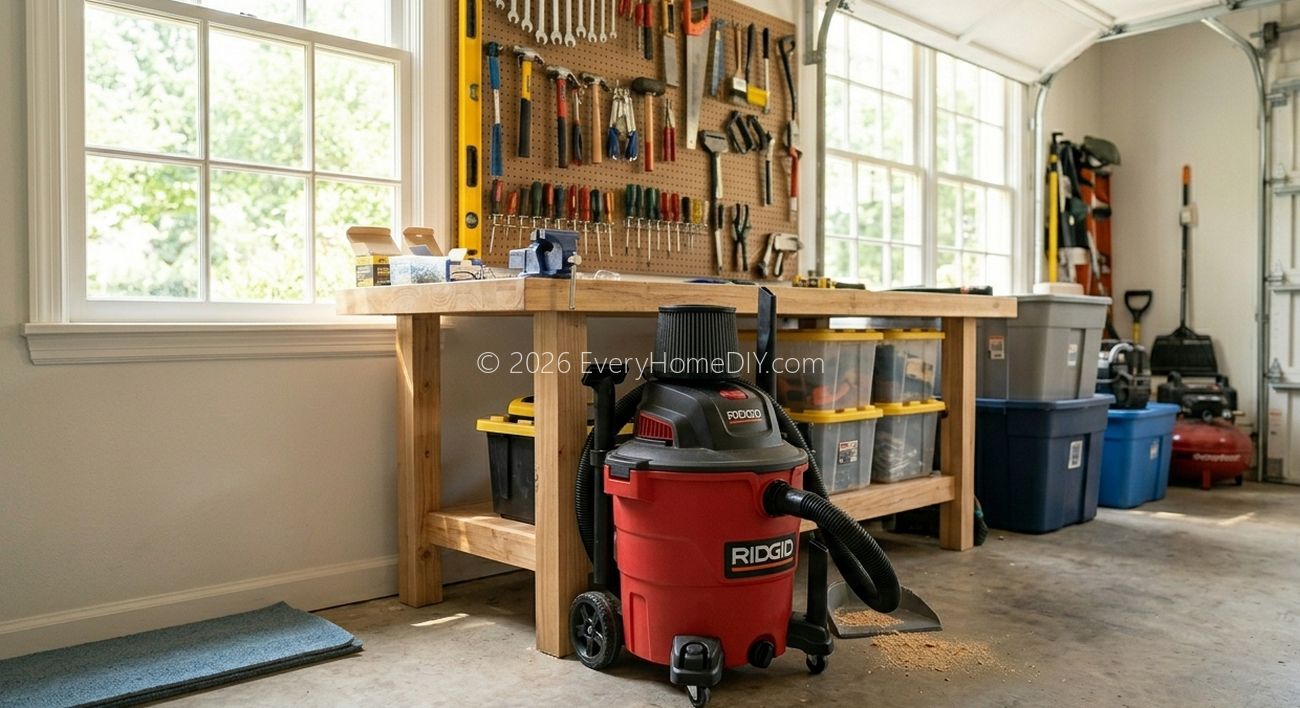
Why Every Homeowner Needs a Shop Vac
A standard household vacuum will be destroyed within minutes by drywall dust, wood shavings, or wet debris. Shop vacuums are built for exactly this kind of abuse — they use large-capacity drums, powerful motors, and filters designed to handle fine dust, liquid, and chunky debris simultaneously. Once you own one, you'll wonder how you lived without it.
How to Size a Shop Vac
- 2–4 gallon: Compact, portable, good for small workshop areas, car cleaning, quick cleanups. Limited capacity for large jobs.
- 5–6 gallon: The sweet spot for most homeowners. Handles most tasks without being too heavy to move around.
- 8–12 gallon: Serious workshop use, large renovation projects, frequent use. Heavier but fewer trips to empty.
- 16–20 gallon: Contractor grade. Overkill for most homeowners unless you're doing major renovation work.
1. RIDGID 4716RV 16-Gallon — Best High-Capacity
RIDGID shop vacs are the tool of choice for contractors and serious DIYers because they're essentially indestructible. The 16-gallon drum handles even large debris loads without constant emptying, the 6.5 peak HP motor generates impressive suction, and the dual-flex hose resists crushing under foot traffic. The accessories are interchangeable with most RIDGID tools. Available at Home Depot and Amazon.
2. CRAFTSMAN CMXEVBE17595 9-Gallon — Best Mid-Size
The Craftsman 9-gallon strikes the right balance for most homeowners — large enough to handle a weekend project without emptying constantly, compact enough to store easily. The 6 peak HP motor handles wet and dry debris equally well. Comes with a generous accessory kit including a wide nozzle, crevice tool, utility nozzle, and car nozzle.
3. Vacmaster VBV1210 5-Gallon — Best Compact
For homeowners who need a shop vac primarily for workshop cleanup, car detailing, and occasional renovation work, the Vacmaster 5-gallon is the right size. It stores compactly, cleans quickly, and costs under $50. Not for heavy-duty contractor use, but perfectly sized for the average homeowner's needs.
Filters Matter
For drywall dust and fine particles, you need a HEPA or fine-dust filter — standard drum filters let fine particles pass through and blow them back into the air. If you're doing any drywall work, insulation removal, or fine woodworking, invest in a quality filter or use a separate dust separator before the shop vac.
Pro Tips
- Remove the filter when vacuuming liquids — paper filters are damaged by water
- Use a shop vac to clean your dryer vent — attach to the vent opening and run it for 2–3 minutes. The lint buildup is a fire hazard and shop vacs remove it easily
- For drywall dust, wrap a thin sock over the exhaust port to capture fine particles that pass through the filter