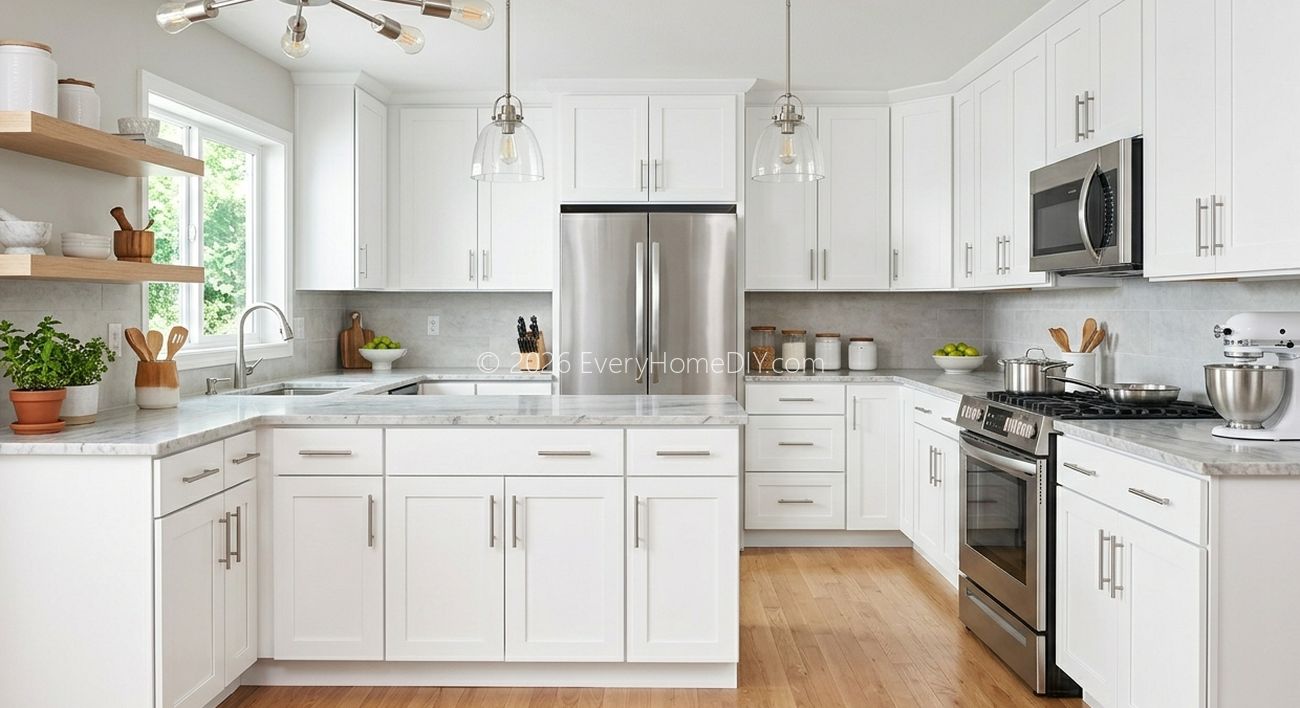
Why Painting Cabinets Is the Best Kitchen Investment
New kitchen cabinets cost $5,000–$20,000 installed. Painting your existing cabinets costs $150–$300 in materials and delivers 80% of the visual impact for 2–5% of the cost. It's not a perfect substitute for new cabinets, but for cabinets that are structurally sound but aesthetically outdated, painting is the smart move. The key is the right products and preparation.
What You'll Need
- TSP substitute cleaner or degreaser
- 120 and 220 grit sandpaper
- Shellac-based primer (Zinsser BIN) or bonding primer
- Cabinet-specific paint (Benjamin Moore Advance or Sherwin-Williams Emerald Urethane Trim)
- High-density foam roller (4-inch) and 2.5-inch angled brush
- Liquid sandpaper / deglosser
- New cabinet hardware (optional but recommended)
The Most Important Step: Degreasing
Kitchen cabinets accumulate years of grease, cooking oil residue, and smoke deposits — even if they look clean. Paint applied over grease won't bond and will peel within months. Clean every surface with TSP substitute or a strong degreaser, wiping in the direction of the wood grain. Do this twice if your kitchen sees heavy cooking.
Step 1: Remove Doors and Hardware
Remove all cabinet doors and drawer fronts and lay them flat — you'll paint them separately. Remove all hardware. Label each door with blue tape (inside, where it won't show) indicating which opening it came from. This seems unnecessary but saves hours of fitting later.
Step 2: Sand Everything
Sand all surfaces with 120-grit to scuff the existing finish and give primer something to grip. You're not trying to remove the old finish — just dull the shine. Wipe away dust with a tack cloth.
Step 3: Apply Shellac Primer
Zinsser BIN shellac-based primer is the professional choice for cabinet painting. It bonds to any surface without sanding, seals in tannin bleed from wood knots, and provides a stable base that prevents the finish coat from soaking in unevenly. Apply one coat, let dry 45 minutes, sand lightly with 220-grit, wipe clean.
Step 4: Apply Cabinet Paint (Two Coats)
Benjamin Moore Advance is the industry standard for cabinet painting. It's a water-borne alkyd that applies like latex (water cleanup, low odor) but cures to a hard, durable finish like oil paint. Apply with a 4-inch high-density foam roller for large flat areas and a brush for edges and profiles. The first coat looks terrible — this is normal. Lightly sand with 220-grit between coats. The second coat transforms it.
Step 5: Cure Before Reinstalling
Benjamin Moore Advance feels dry within an hour but takes 30 days to reach full hardness. Wait at least 3–5 days before reinstalling doors. Handle gently for the first month — even after it looks and feels dry, the finish is still curing and can be marked by hard contact.
Hardware Upgrade
New hardware is the cheapest way to complement a cabinet paint job. Simply Handles, Cosmas, and Franklin Brass on Amazon offer kitchen cabinet hardware sets that replace all your pulls and knobs for $50–$100. The difference between dated brass hardware and matte black or brushed nickel is transformative.